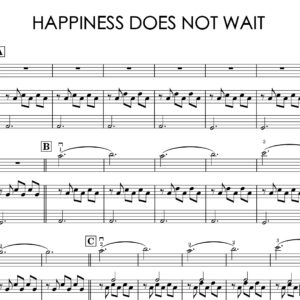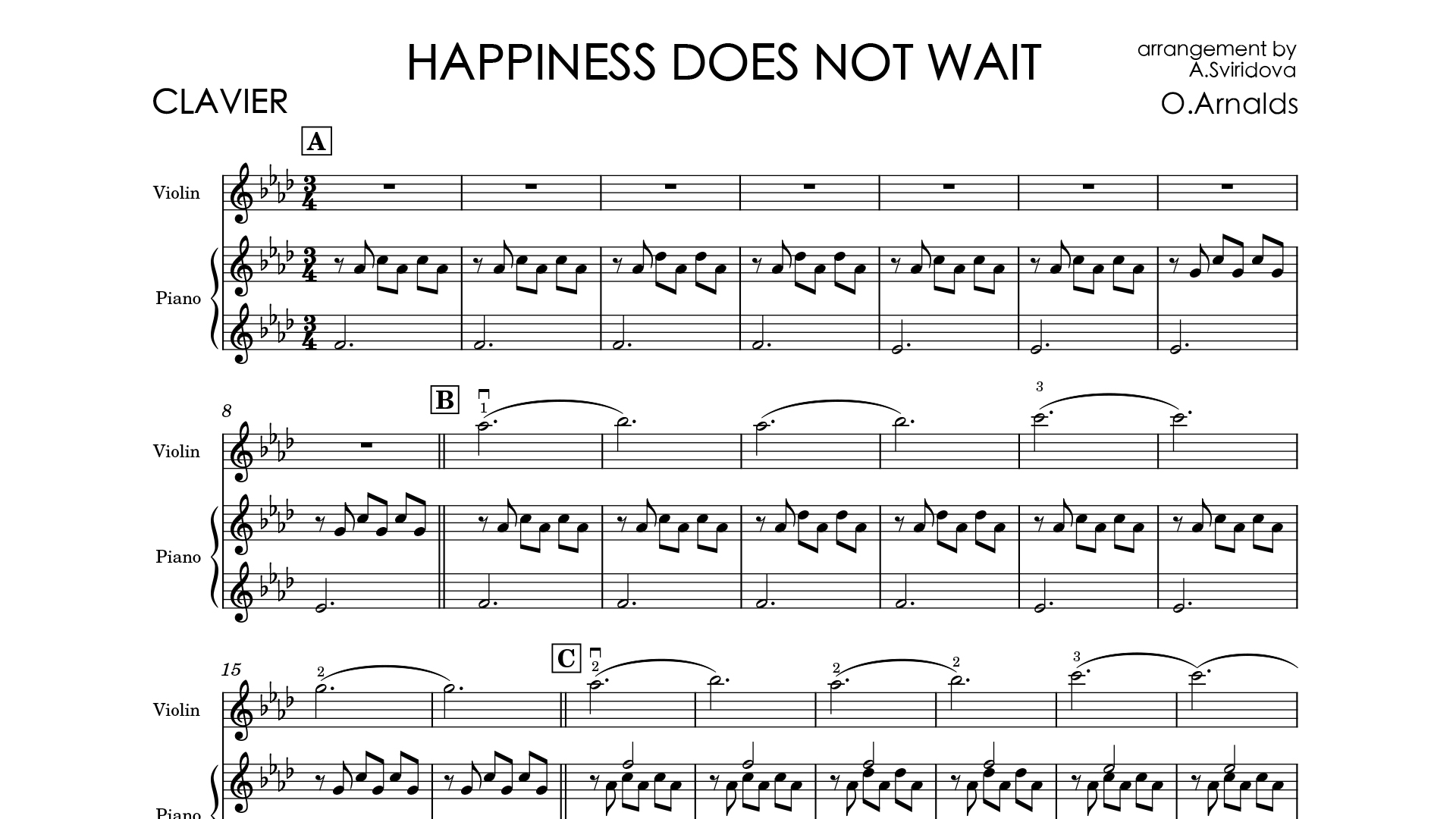
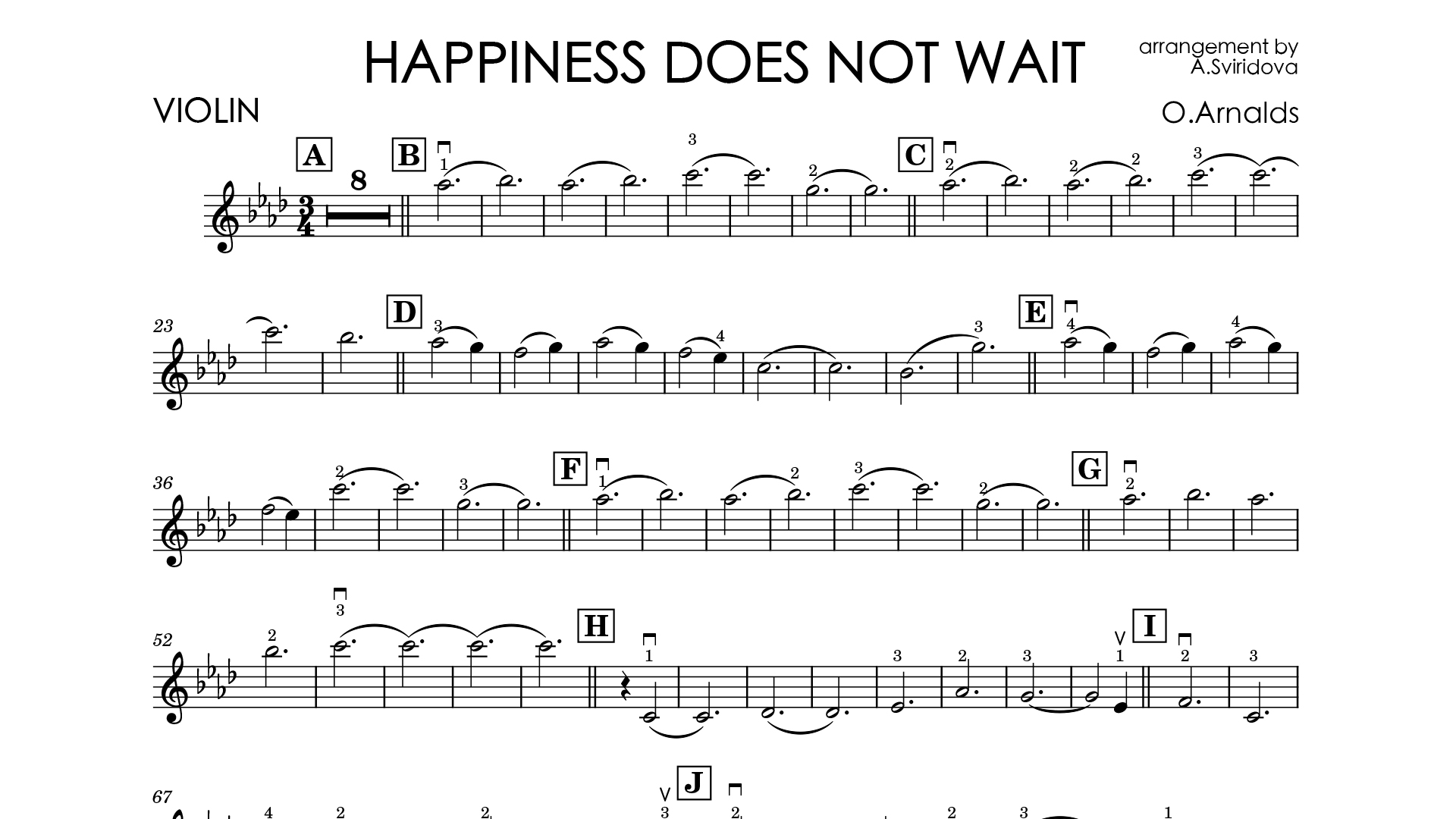
Experience Ólafur Arnalds’ Happiness Does Not Wait in a thoughtfully crafted arrangement for violin and piano. Faithfully adapted from the original composition, this edition preserves the minimalist character and gradual musical development that define Arnalds’ distinctive style while providing high-quality practice resources for violinists preparing for both rehearsal and performance.
Whether you’re exploring contemporary classical repertoire, preparing a recital program, or simply enjoying modern minimalist music, this collection combines professionally prepared sheet music with studio-quality piano accompaniment tracks to support every stage of your practice.
The included practice tempos allow you to gradually build confidence before progressing to the full performance tempo while maintaining consistent phrasing, tone production and musical expression.
Arrangement Notes
This arrangement captures the intimate dialogue between violin and piano that lies at the heart of Happiness Does Not Wait. The violin carries long, lyrical melodic lines above gently evolving piano harmonies, creating a spacious musical texture that rewards careful listening and expressive phrasing rather than technical display.
Rather than relying on virtuosic passages, the arrangement emphasizes sustained tone, controlled dynamics and natural musical flow. The repeating harmonic patterns in the accompaniment provide a stable foundation while allowing the solo line to develop organically throughout the piece.
Musical Characteristics
- Contemporary classical / modern minimalist style
- Long lyrical melodic phrases
- Transparent piano accompaniment
- Gradual dynamic development
- Repetitive harmonic patterns characteristic of Nordic minimalism
- Expressive, reflective musical atmosphere
The music unfolds gradually, encouraging careful phrase shaping and subtle expressive choices instead of dramatic contrasts or technical brilliance.
Technical Overview
Difficulty: Intermediate to Advanced
This arrangement is best suited for violinists who are comfortable with expressive playing and confident basic technique. While it contains few overtly virtuosic passages, achieving a convincing performance requires musical maturity and refined tone control.
Players will develop:
- Smooth legato bowing
- Consistent tone production across long phrases
- Controlled vibrato
- Confident position changes
- Accurate intonation during sustained melodic lines
- Dynamic control and phrase shaping
- Ensemble awareness when performing with accompaniment
The technical demands arise from maintaining musical consistency and expressive control rather than speed or complexity.
Performance Notes
The spacious texture of the accompaniment allows the violin melody to remain the musical focus throughout the piece. Successful performances depend on maintaining a steady pulse while allowing the phrasing to breathe naturally.
Several tempo transitions and ritardando passages require careful preparation, making it beneficial to rehearse with the accompaniment early rather than waiting until the final stages of practice.
Because the arrangement develops gradually, careful pacing of dynamics is more effective than exaggerated contrasts. A warm, singing tone and restrained vibrato complement the character of the music particularly well.
Practice Tips
Begin practicing with one of the slower backing tracks to establish stable intonation and consistent bow speed before introducing full expressive vibrato.
Focus first on producing an even, sustained sound throughout each phrase rather than reaching performance tempo too quickly. As your confidence grows, progress through the included accompaniment tempos while maintaining the same tone quality, phrasing and musical direction.
Listening carefully to the piano accompaniment will also help develop ensemble awareness and prepare you for a more natural concert performance.
Frequently Asked Questions
Is this arrangement suitable for intermediate violinists?
Yes. The technical demands are primarily musical rather than virtuosic, making it well suited to intermediate and advanced players with good tone production and shifting technique.
Are slower practice recordings included?
Yes. Piano accompaniment tracks are included at 60 BPM, 55 BPM, 50 BPM and 40 BPM, allowing you to build confidence gradually before performing at full tempo.
Can I use this as a violin play-along track for practice?
Yes, perfectly. With four different practice tempos (40 to 60 BPM) and an included violin reference track, this package is designed specifically for violin play-along practice and gradual tempo mastery.
Is the backing track the full length of the original piece?
Yes. The piano accompaniment tracks fully match the arrangement, preserving the complete structure, minimalist evolution, and timing of the original composition.
What files will I receive?
You’ll receive printable PDF sheet music together with MP3 piano backing tracks and a reference violin performance track.
Can I use the backing track for performances?
Yes. The professionally recorded piano accompaniment is designed for both practice sessions and live performance.
Is this a physical product?
No. This is a digital download that becomes available immediately after purchase.
Product Information
- Composer: Ólafur Arnalds
- Arrangement: PlayWithOrchestra
- Instrument: Violin
- Accompaniment: Piano
- Key: B minor (New)
- Format: Digital Download
- Sheet Music: PDF
- Audio Format: MP3
- Included Practice Tempos: 40 BPM, 50 BPM, 55 BPM, 60 BPM
- Difficulty: Intermediate–Advanced (Approx. ABRSM Grade 5–6)